Program 2 - Traumatic Brain Injury
Introduction of An Unmet Need
Traumatic Brain Injury (TBI) is a major global health problem caused by external mechanical forces that disrupt normal brain function. It ranges from mild concussion to severe brain injury and may result in long-term difficulties in cognition, mood, and motor control. Current treatment generally focuses on acute stabilization, control of intracranial pressure, and rehabilitation. However, these approaches do not always address the secondary drivers of neuronal injury, including mitochondrial dysfunction, oxidative stress, and neuroinflammation.1–3
Biophoton therapy, delivered through strong biophoton generators, is a non-invasive and drug-free approach aimed at supporting neuronal repair and brain recovery. Findings from photobiomodulation research suggest that this strategy may improve mitochondrial function, neuroplasticity, and cerebral blood flow, making it a promising adjunct to conventional care for TBI.4–6
Pathophysiology of Traumatic Brain Injury
Causes
TBI most commonly results from falls, motor vehicle accidents, sports-related impacts, and blast injuries in military personnel. These forms of trauma can lead to diffuse axonal injury, intracranial bleeding, bruising, and cerebral edema.2,3
Symptoms
• Mild TBI (concussion): headache, dizziness, confusion, and memory deficits.
• Moderate to severe TBI: loss of consciousness, seizures, persistent headaches, impaired cognition, and emotional disturbance.1
Mechanisms of Biophoton Therapy in TBI
Enhancement of Mitochondrial Function
Photon absorption by mitochondrial chromophores, especially cytochrome c oxidase, stimulates electron transport and ATP synthesis. By restoring cellular energy metabolism, biophoton therapy may support neuronal repair and synaptic function.4,5
Enhancement of Mitochondrial Function
Photon absorption by mitochondrial chromophores, especially cytochrome c oxidase, stimulates electron transport and ATP synthesis. By restoring cellular energy metabolism, biophoton therapy may support neuronal repair and synaptic function.4,5
Promotion of Neuroplasticity and Neurogenesis
Preclinical and clinical studies suggest that biophoton therapy may promote neurogenesis and synaptogenesis. These effects may help support rewiring of damaged neural networks and contribute to functional recovery.7,8
Reduction of Neuroinflammation
Biophoton therapy may help reduce neuroinflammation by downregulating pro-inflammatory cytokines such as IL-1β and TNF-α. This may create a more protective environment for neural recovery.5,6
Improvement of Cerebral Blood Flow
Improved microcirculation may increase oxygen and nutrient delivery to injured brain regions, supporting both acute neuroprotection and rehabilitation outcomes.9
Attenuation of Oxidative Stress
TBI is associated with accumulation of reactive oxygen species (ROS), which can worsen neuronal injury. Biophoton therapy may strengthen antioxidant defense pathways and reduce oxidative damage.6
Restoration of Blood-Brain Barrier Integrity
Biophoton therapy has also been reported to help stabilize the blood-brain barrier, reducing leakage, edema, and related complications after injury.10
Applications Across the TBI Continuum
Acute phase
May reduce secondary inflammatory and oxidative cascades, supporting neuroprotection.
Rehabilitation phase
May enhance physical and cognitive rehabilitation, including motor coordination and executive function.
Chronic management
May help reduce fatigue, depression, and cognitive decline while supporting sustained neuroplasticity.7,9
Evidence from Studies
Neuroimaging
Studies have reported improved connectivity and metabolic activity after photobiomodulation therapy.7
Biochemical assays
Studies have shown decreased inflammatory markers and enhanced mitochondrial biogenesis.5,6
Clinical case studies
Reports describe improvements in cognition, mood, and recovery speed in TBI patients treated with biophoton therapy.7,9,10
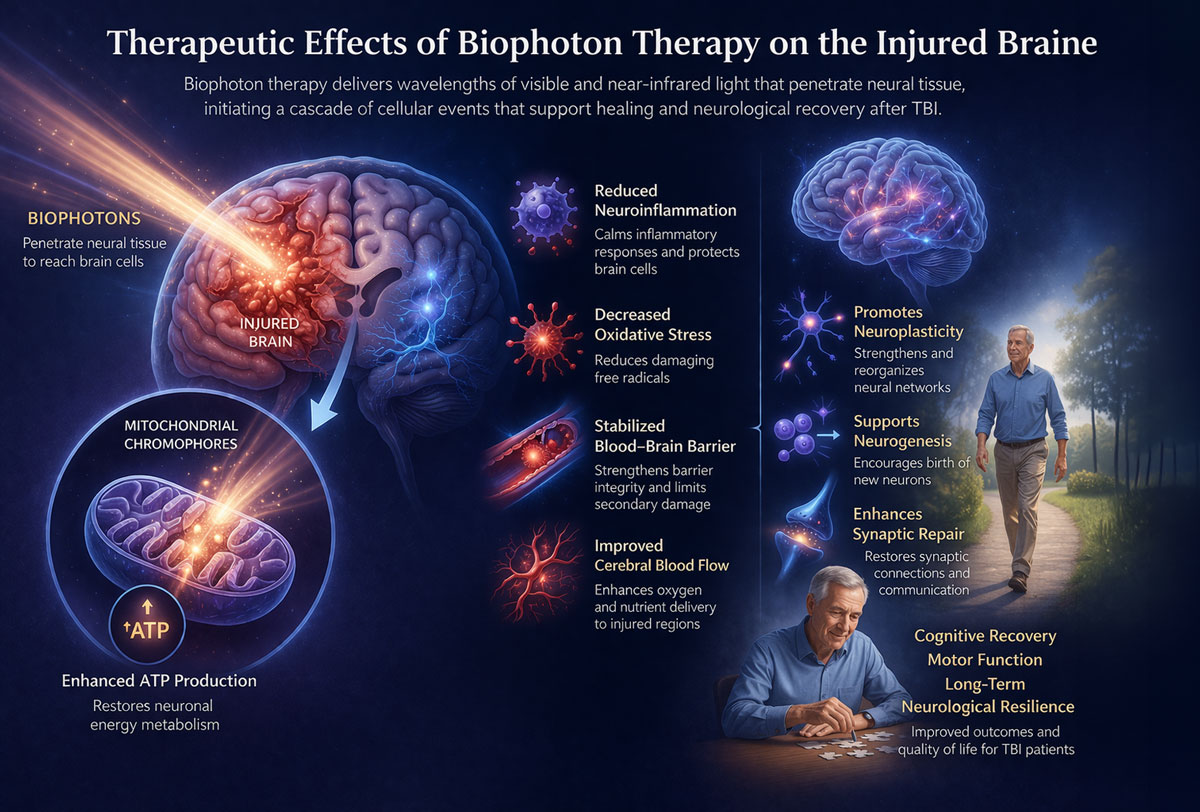
Figure XX4. Biophoton Therapy in Traumatic Brain Injury (TBI). Illustration depicting the therapeutic effects of biophoton therapy on the injured brain. Biophotons penetrate neural tissue and interact with mitochondrial chromophores, enhancing ATP production and restoring neuronal energy metabolism. The therapy reduces neuroinflammation and oxidative stress, stabilizes the blood-brain barrier, and promotes cerebral blood flow. Together, these effects foster neuroplasticity, neurogenesis, and synaptic repair, supporting cognitive recovery, motor function, and long-term neurological resilience in patients with TBI.
Integration Into Treatment Protocols
Biophoton therapy may be used as a complementary approach alongside physical, occupational, and cognitive rehabilitation. It may also serve as a standalone non-pharmacological intervention in selected settings. For chronic cases, it may provide long-term maintenance support, especially as portable home-use devices continue to develop.4,7
Future Directions
Further research is needed to confirm efficacy and establish standardized clinical protocols for traumatic brain injury. Important next steps include:
• Randomized controlled trials in diverse TBI populations
• Mechanistic studies exploring molecular pathways of repair
• Personalized treatment strategies based on injury severity
• Integration with neurotechnology such as EEG, neurofeedback, and brain–computer interfaces.4,6,10
Ethical And Safety Considerations
Biophoton therapy offers a promising approach to TBI management by directly targeting major secondary injury mechanisms, including mitochondrial dysfunction, oxidative stress, and neuroinflammation, while also promoting neuroplasticity and neuronal recovery. Its potential integration into acute care, rehabilitation, and chronic management may improve neurological outcomes and broaden future options for traumatic brain injury treatment.1–10
Conclusion
Biophoton therapy offers a promising approach to TBI management by directly targeting major secondary injury mechanisms, including mitochondrial dysfunction, oxidative stress, and neuroinflammation, while also promoting neuroplasticity and neuronal recovery. Its potential integration into acute care, rehabilitation, and chronic management may improve neurological outcomes and broaden future options for traumatic brain injury treatment.1–10
References
1. Xiong Y, Mahmood A, Chopp M. Emerging treatments for traumatic brain injury. Expert Opin Emerg Drugs. 2009;14(1):67–84. doi:10.1517/14728210902769601
2. Werner C, Engelhard K. Pathophysiology of traumatic brain injury. Br J Anaesth. 2007;99(1):4–9. doi:10.1093/bja/aem131
3. Maas AIR, Menon DK, Adelson PD, et al. Traumatic brain injury: integrated approaches to improve prevention, clinical care, and research. Lancet Neurol. 2017;16(12):987–1048. doi:10.1016/S1474-4422(17)30371-X
4. Hamblin MR. Photobiomodulation for traumatic brain injury and stroke. J Neurosci Res. 2018;96(4):731–743. doi:10.1002/jnr.24190
5. Salehpour F, Mahmoudi J, Kamari F, et al. Brain photobiomodulation therapy: a narrative review. Mol Neurobiol. 2018;55(8):6601–6636. doi:10.1007/s12035-017-0852-4
6. Huang YY, Sharma SK, Carroll J, Hamblin MR. Biphasic dose response in low level light therapy. Dose Response. 2011;9(4):602–618. doi:10.2203/dose-response.11-009.Hamblin
7. Naeser MA, Zafonte R, Krengel MH, et al. Cognitive improvements post-TBI after transcranial red/near-infrared LED treatments. J Neurotrauma. 2014;31(11):1008–1017. doi:10.1089/neu.2013.3244
8. Johnstone DM, Moro C, Stone J, Benabid AL, Mitrofanis J. Turning on lights to stop neurodegeneration: near-infrared therapy in Alzheimer’s and Parkinson’s. Front Neurosci. 2016;9:500. doi:10.3389/fnins.2015.00500
9. Henderson TA, Morries LD. Near-infrared photonic energy penetrates deeply into the brain. Neuropsychiatr Dis Treat. 2015;11:2199–2210. doi:10.2147/NDT.S78182
10. Dong T, Zhang Q, Hamblin MR, Wu MX. Low-level light with metabolic modulators for brain injury therapy. J Cereb Blood Flow Metab. 2015;35(9):1435–1444. doi:10.1038/jcbfm.2015.109
11. Liu JZ, Smotrys MA, Robinson SD, Yu HX, Sherry X Liu SX, Liu DR, and Gu HY. Biophoton Therapy Reverses Electrophysiological Deficits in Chronic Traumatic Brain Injury: Quantitative EEG Evidence of Cognitive and Network Recovery. J Neurol Res Rev Rep. 2025;7(8):1-11.
12. Thomas T, Gu HY, Smotrys MA, Robinson SD, and Liu JZ. Non-Invasive Biophoton Therapy for Neurocognitive and Physical Recovery in Retired Athletes with Traumatic Brain Injury: A Pilot Study in Former NFL Players. Journal of Neurology Research Reviews & Reports. 2025. SRC/JNRRR-288. DOI: doi.org/10.47363/JNRRR/2025(7)230.
Disclaimer: BrainHealing.com provides informational content regarding investigational neurological treatment programs and related scientific development activities. The information presented on this website is intended for investors, researchers, healthcare professionals, and potential strategic partners.
The investigational programs described on this website are under evaluation and are not offered for commercial sale. Statements on this website should not be interpreted as claims of regulatory approval, medical efficacy, or therapeutic effectiveness unless explicitly stated.
Nothing on this website constitutes medical advice. Individuals should consult qualified healthcare professionals regarding medical conditions or treatment decisions.

Copyright © 2026 BrainHealing Inc.