Investigational Neurological Treatment Programs
BrainHealing™ focuses on four neurological conditions characterized by substantial unmet clinical need and long term disability burden.
EXPLORE PROGRAMS
Each program explores investigational treatment concepts supported by pilot clinical research and translational scientific rationale.
The goal of these programs is to evaluate potential pathways that may contribute to improved neurological function and patient quality of life.
Unmet Medical Conditions
Program 1 - Chronic Stroke
Restoring Function After Stroke Through Non-Invasive Biophoton Therapy
Chronic stroke remains one of the leading causes of long-term disability worldwide. Even after completing standard rehabilitation, many stroke survivors continue to live with persistent motor weakness, impaired coordination, speech difficulties, cognitive decline, fatigue, and emotional challenges.
Biophoton Quantum Medicine (BQM) is an emerging, non-invasive therapeutic approach designed to support neurological recovery after stroke. By targeting brain energy metabolism, cerebral circulation, neuroinflammation, oxidative stress, and neuroplasticity, BQM represents a promising adjunctive strategy for chronic stroke rehabilitation.
Overview
Stroke can leave lasting neurological deficits long after the acute event has passed. In the chronic phase, many patients experience a plateau in recovery despite physiotherapy, occupational therapy, speech therapy, and supportive medical care. This often occurs because damaged neural networks, impaired blood flow, inflammation, mitochondrial dysfunction, and oxidative stress continue to limit the brain’s capacity to heal.
Biophoton Quantum Medicine is based on the therapeutic application of strong biophoton generators and related photobiomodulation principles. This approach is designed to help reactivate the brain’s natural repair processes by improving cellular energy production, supporting neuronal signaling, enhancing blood flow, and promoting functional reorganization of surviving neural circuits.
UNDERSTANING CHRONIC STROKE
Stroke is Broadly Categorized Into Three Major Forms:
Ischemic Stroke
The most common form of stroke, caused by blockage of blood flow to part of the brain.
Hemorrhagic Stroke
Caused by rupture of a blood vessel and bleeding into or around the brain.
Transient Ischemic Attack (TIA)
A temporary interruption of cerebral blood flow that may not produce permanent injury, but signals increased risk.
In the chronic stage, stroke survivors may continue to experience:
• Motor impairment such as weakness, spasticity, abnormal reflexes, and gait dysfunction
• Cognitive difficulties including reduced memory, attention, processing speed, and executive function
• Speech and language deficits such as aphasia or dysarthria
• Emotional consequences including depression, anxiety, and mood instability
These ongoing deficits are often driven not only by the original brain injury, but also by secondary processes that limit recovery over time.
How Biophoton Quantum Medicine May Support Stroke Recovery
Enhancing Neuroplasticity
Recovery after stroke depends heavily on neuroplasticity, the brain’s ability to reorganize itself and form new functional connections. Biophoton-based interventions may help stimulate synaptogenesis, dendritic branching, and network reorganization, allowing surviving neurons to compensate for injured regions.
By supporting adaptive rewiring of neural pathways, BQM may help improve motor learning, coordination, and recovery of function.
Improving Cerebral Blood Flow
Reduced perfusion is a major barrier to recovery in chronic stroke. Biophoton therapy may help promote vasodilation and improve microcirculation, supporting oxygen and nutrient delivery to vulnerable brain tissue.
Enhanced blood flow may improve the metabolic environment of damaged or underperforming neural regions and contribute to better functional outcomes.
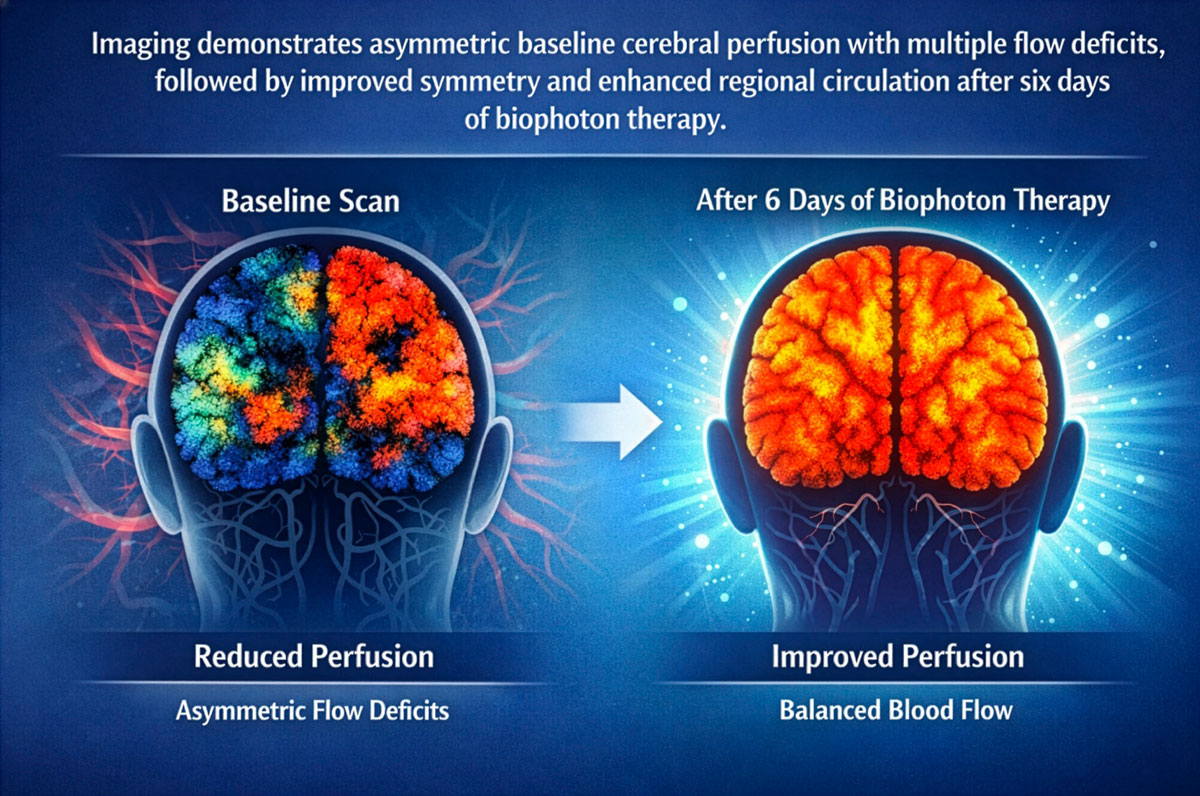
Figure XY2. Cerebral perfusion before and after biophoton therapy. Imaging demonstrates asymmetric baseline cerebral perfusion with multiple flow deficits, followed by improved symmetry and enhanced regional circulation after six days of therapy.
Restoring Brain Tissue Energy
Stroke-injured neurons often suffer from impaired ATP production and mitochondrial dysfunction. This energy deficit can persist into the chronic phase and limit neuronal signaling, muscle control, cognition, and repair.
Biophoton Quantum Medicine is designed to support mitochondrial activity, restore redox balance, and improve cellular energy metabolism. By improving neuronal energy availability, BQM may help support neuromuscular coordination, cognitive recovery, and overall brain function.
Reducing Neuroinflammation
Inflammation is a major contributor to continued tissue damage after stroke. Chronic activation of inflammatory pathways can worsen neuronal loss and interfere with the brain’s repair capacity.
Biophoton therapy may help modulate inflammatory signaling by reducing pro-inflammatory cytokines and supporting a more favorable environment for healing and neural recovery.
Supporting Mitochondrial Function
Mitochondria are central to brain repair. Their ability to generate energy, regulate oxidative balance, and support cell survival is especially important after neurological injury.
Biophoton therapy may promote mitochondrial biogenesis and improve oxidative phosphorylation efficiency, helping provide the sustained energy required for neuroregeneration and synaptic activity.
Decreasing Oxidative Stress
Oxidative stress contributes to ongoing neuronal injury after stroke and may accelerate degeneration in tissue surrounding the lesion.
Biophoton Quantum Medicine may help reduce excess reactive oxygen species while supporting endogenous antioxidant defenses. This may help protect vulnerable neurons and preserve function in areas surrounding the original injury.
Promoting Synaptic Strengthening and Functional Recovery
Synaptic plasticity is essential for relearning movement, language, cognition, and other functions after stroke. By supporting neurotrophic signaling and synaptic strengthening, BQM may help reinforce the neural changes needed for long-term rehabilitation gains.
This is particularly relevant when therapy is combined with physical rehabilitation, speech therapy, or task-specific retraining.
Potential Applications in Chronic
Stroke Rehabilitation
Biophoton Quantum Medicine may have broad relevance across multiple
dimensions of stroke recovery, including:
Motor Recovery
Support for strength, coordination, balance, gait, spasticity reduction, and upper-limb rehabilitation.
Speech and Language Recovery
Support for naming, fluency, comprehension, and communication in patients with aphasia or related deficits.
Cognitive Rehabilitation
Support for attention, memory, problem-solving, processing speed, and executive function.
Emotional and Psychological Recovery
Support for mood stabilization, reduction of anxiety and depressive symptoms, and improved quality of life.
Clinical and Translational Evidence
A growing body of preclinical and clinical literature supports the relevance of photobiomodulation-based approaches in neurological recovery. Reported findings include:
• Improved regional cerebral blood flow and hemodynamic activity
• Enhanced functional connectivity on neuroimaging
• Better gait, balance, and motor performance
• Reduction in inflammatory and oxidative stress markers
• Improved mitochondrial activity and ATP production
• Better patient-reported independence, fatigue, and
recovery experience
Recent work from our group further supports the translational relevance of biophoton therapy in chronic stroke. Multimodal findings have shown improvements in cerebral hemodynamics, EEG activity, cognitive function, motor performance, and hemorheology in chronic stroke patients treated with biophoton-based interventions.
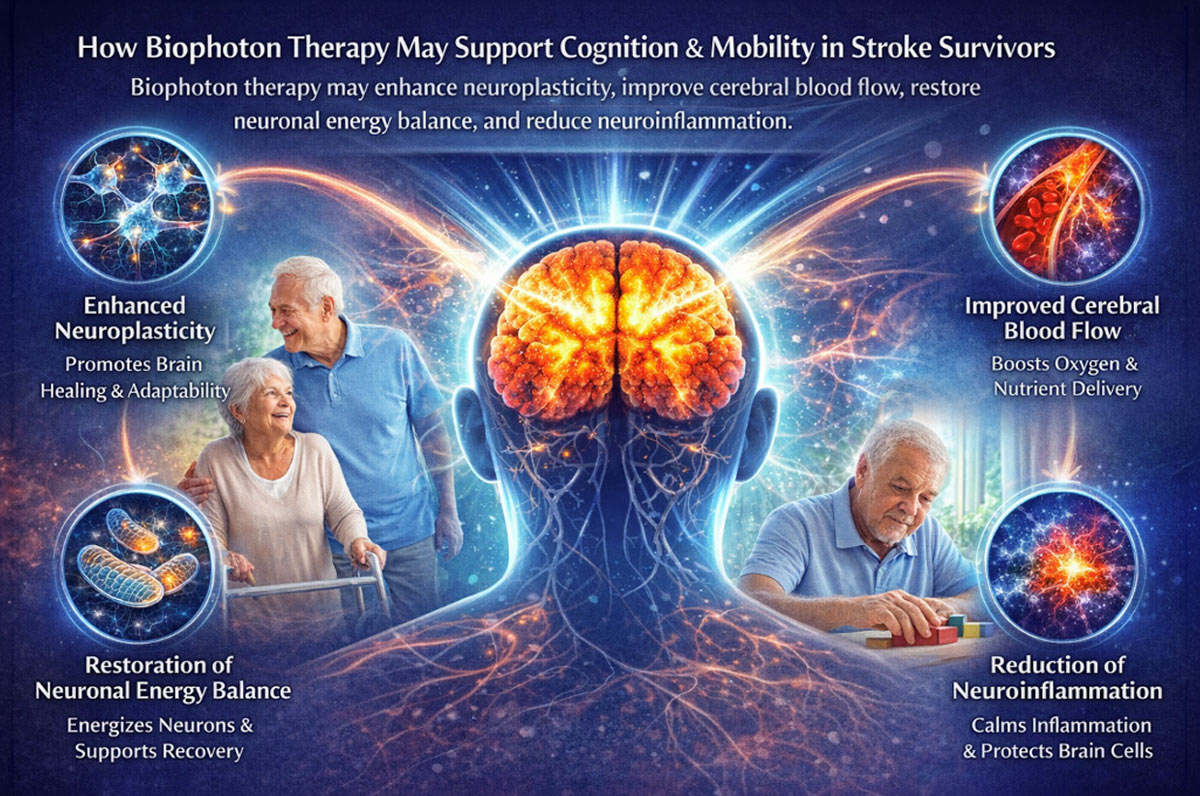
Figure XY3. Biophoton Therapy in Stroke Rehabilitation. This illustration shows how biophoton therapy may support cognition and mobility in stroke survivors through enhanced neuroplasticity, improved cerebral blood flow, restoration of neuronal energy balance, and reduction of neuroinflammation.
Disclaimer: BrainHealing.com provides informational content regarding investigational neurological treatment programs and related scientific development activities. The information presented on this website is intended for investors, researchers, healthcare professionals, and potential strategic partners.
The investigational programs described on this website are under evaluation and are not offered for commercial sale. Statements on this website should not be interpreted as claims of regulatory approval, medical efficacy, or therapeutic effectiveness unless explicitly stated.
Nothing on this website constitutes medical advice. Individuals should consult qualified healthcare professionals regarding medical conditions or treatment decisions.
Copyright © 2026 BrainHealing Inc.